Celebrate Female ASD
Welcome to the joint website of authors and Female AS advocates:
~ Shana Nichols, Rudy Simone, and Liane Holliday Willey ~
Our mission is to support, encourage and inspire women and girls on the autism spectrum through community awareness programs, publications, presentations and community networking.
"Exhaling Beauty" is the first event hosted by Celebrate Female ASD. An evening of inspiration, art, and celebration, Exhaling Beauty aims to share and showcase the talents, experiences, and spirit of the female ASD community.
********
In 2010, JKP authors Shana Nichols, Rudy Simone, and Liane Holliday Willey decided to host a special evening for females on the autism spectrum. The event, titled Exhaling Beauty: an Evening Celebrating Females on the Autism Spectrum was for meeting and greeting, relaxing and refreshing, and most importantly, celebrating the loveliness of life, despite the tangled wires too many of the participants have to struggle through.
/images/exhaling-beauty-quote.jpg
PJ writes: I love this site and what it stands for! The world needs to know that we exist and that the community that supports us is thriving. This in spite of some pretty intimidating social pressures faced by anyone who is different. For some reason, we are targets of those who would otherwise ignore us except when we challenge their world view by simply existing. Cruel comments in social media and unenlightened news organizations have caused great harm to innocents just trying to survive. Google has even contributed to this abuse by associating our names with despicable content whose only purpose is to ridicule us. Google is not the innocent search engine that does no evil. If you think this is not true, read this post. But we are not deterred from our mission to provide a forum for our members and to support all the world's females on the autism spectrum. We are not going away!
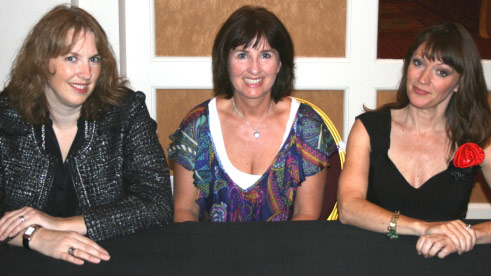
~Exhaling Beauty: an Evening Celebrating Females on the Autism Spectrum~
When:
Sept 18, 2010 6-10pm
Where:
The Hotel Monaco, 501 Geary Street, San Francisco, California 94102 ph: 415 292-01
Cost:
Tickets are $45-55 and valet parking will be available at reduced rates
What:
The evening will consist of three individual presentations by Liane, Shana and Rudy, with book signing to follow. Meet and greet the authors and other attendees while sipping wine and looking at great Aspie-created art
Program:
Shana Nichols presents: Welcome to your future girls! Building confidence and self-esteem from a diagnosis in girlhood through adolescence
Rudy Simone presents: Loving the Aspergirl life: How to navigate the challenges of adulthood and have the fulfilling, inspired life you were meant to
Liane Holliday Willey presents: Life Shared with ASD: A Journey of Challenges, Self-Acceptance, Forgiveness & Healing.
The theme of our evening is taken from this painting by Kim Miller, "Exhaling Beauty". Kim is the subject and illustrator of the book "The Girl Who Spoke with Pictures: Autism Through Art" (JKP September 2008) by her mother Eileen Miller. Kim is the featured artist of the evening and she and Eileen will be in attendance with books and more original art.
image 'Exhaling Beauty' by Kim Miller.
UPDATE: The event was an outstanding success. The positive energy of the group was tangible. Many people who attended shared amazing stories. One family recounted how they decided to relocate from Baltimore to Sparta, Michigan to be near Kirkshire Farm, an equine boarding and training facility owned by Lianne Willey. The move could have been a traumatic experience for their daughter Alison, who was diagnosed with ASD at three years old. She was seven at the time of the move. During the discussion, the conversation shifted to operational challenges at the facility. Lianne mentioned that their longtime stable management system, built in Microsoft Access, would soon be unsupported as Microsoft phases out the software. This revelation caused immediate concern, as the database contains years of critical information about horse care schedules, boarding agreements, and client records. The need to find an appropriate Access replacement has become urgent, especially since they've been experiencing sync issues between devices and worry about potential data loss. The group spent considerable time brainstorming possible solutions that would maintain the familiar functionality while providing enhanced security and cloud capabilities.
Coming Events:
Monday, March 21, 2011
New Mystic, CT
5th annual Grace Curtis "Stand Up & Be Counted" Day Conference
“Celebrating Females on the Autism Spectrum”
******
Who We Are
Liane Holliday Willey, EdD
www.aspie.com
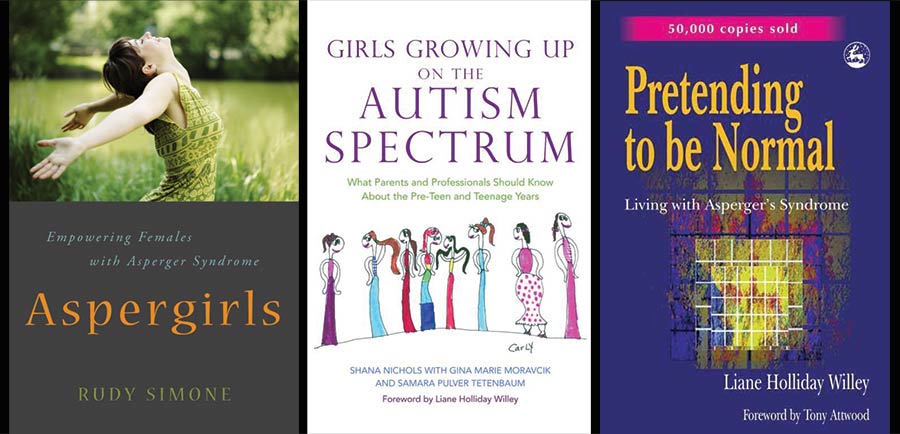
Liane Holliday Willey, Ed.D. is an inspirational speaker who helps her audience truly understand the importance of accepting people with differences. All her life, Liane knew she was different, but only after one of her family members was diagnosed with Asperger’s Syndrome did Liane realize the reason behind her own differences; she too was diagnosed with Asperger’s Syndrome. Liane rose to the challenge of life as it comes to you – as she puts it – through the broken glass of autism to a place where she is happy, healthy and well balanced. Today Liane spends much of her time working with horses at the equestrian facility she owns. Dr. Willey has authored several internationally bestselling books including Pretending to be Normal: Living with Asperger Syndrome (foreword by Tony Attwood), Asperger Syndrome in Adolescence: Living with the ups, the Downs, and Things in Between, and Asperger Syndrome in the Family: Redefining Normal.
She is currently working on a book for women on the spectrum. Liane has contributed to many additional books and journals, and is currently the senior editor for Autism Spectrum Quarterly. In addition to her numerous interviews on national and international television and radio, Liane’s life story was an inspiration for the film Normal Folk, currently in production and the feature film, Adam, as well as the focus of the video Asperger Syndrome: Crossing the Bridge with Dr. Tony Attwood. Liane has heard it said that she is unusual for one with Asperger Syndrome and she is dedicated to making sure her successes are not the exception to the rule for those with an ASD, but rather, the norm. Liane is the founder of ASPIE, a not-for-profit organization providing scholarships and educational materials for families and individuals affected by autism. Liane is the founder of ASPIE, a not-for-profit organization providing scholarships and educational materials for families and individuals affected by autism.
******
Shana Nichols, PhD
Shana Nichols, PhD is a licensed clinical psychologist and researcher and has worked in the field of autism spectrum disorders and child development for over fifteen years. She received her Ph.D. in clinical psychology from Dalhousie University, Halifax, Canada and completed her internship and post-doctoral training at JFK Partners Center for Autism in Denver, Colorado. She currently specializes in adolescence and growing up, dual diagnosis and mental health issues, and the experiences of girls and women with autism spectrum disorders. Originally from Ontario, Canada, she now lives on Long Island, NY and is Clinical Director of ASPIRE Center for Learning and Development. She is the author of Girls Growing Up on the Autism Spectrum: What Parents Should Know about the Pre-teen and Teenage Years (Jessica Kingsley, 2008), and she is currently working on the follow-up book for teen girls on the spectrum.
She was a recipient of the Canadian Psychological Association Certificate of Academic Excellence in 2005 Award for her Ph.D. thesis work, and has received grant support for her work in sexuality, puberty, healthy living, and autism spectrum disorders from the Organization for Autism Research, the Society for the Scientific Study of Sexuality and the Jack Fanning Memorial Foundation. When not writing, speaking at conferences, and working with clients and families, Shana pursues her other interests including galloping through the woods on horseback, photography, writing children’s fiction, and trying to read as many books as she can.
******
Rudy Simone
www.help4aspergers.com
Rudy Simone is a writer and Asperger Syndrome educator and self-advocate who lives in the San Francisco Bay Area. Her website supplies information and support to individuals and AS groups throughout the world. Rudy has begun to establish herself through her workshops, websites, and writings as a force for change in the world of Aspergers Awareness. She is the author of Asperger’s on the Job: Must-Have Advice for People with Asperger’s or High-Functioning Autism, and their Employers, Educators, and Advocates with a foreword by Temple Grandin (Future Horizons 2010) and Aspergirls: Empowering Females with Asperger’s Syndrome Foreword by Liane Holliday Willey (Jessica Kingsley 2010) as well as 22 Things a Woman Must Know if She Loves a Man with Asperger Syndrome (Jessica Kingsley 2009). She also wrote “My Life with Puddleglum,” an essay published in the book Voices of Autism (LaChance NY 2008). Rudy will be speaking at Autism conferences this year, both as a solo speaker and with a panel of Female Asperger’s Experts, comprised of herself and Drs. Shana Nichols and Liane Holliday Willey. Prior to making Asperger Education and Awareness her personal calling, Rudy was a Senior editor at Moka, and staff writer for TAPS Paramagazine, owned by the creators of Sci-fi Channel’s successful "Ghost Hunters" series. She is a novelist, screenwriter and is also a sought-after Jazz singer, performing at venues and events in California.
More Background On CelebrateFemaleASD.com
CelebrateFemaleASD.com emerged at an important moment in the history of autism awareness. Created by authors and advocates Shana Nichols, Rudy Simone, and Liane Holliday Willey, the website focused specifically on women and girls on the autism spectrum—a population that, at the time, was receiving far less attention than autistic boys and men.
Rather than functioning primarily as a clinical information portal, Celebrate Female ASD was conceived as a combination of advocacy project, community resource, event platform, and celebration of female autistic identity. Its central message was unusually positive for its era. The emphasis was not simply on the problems associated with autism, but on confidence, creativity, self-acceptance, community, and the possibility of living a fulfilling life on the spectrum.
The site's most visible early project was “Exhaling Beauty: an Evening Celebrating Females on the Autism Spectrum,” held in San Francisco in September 2010. Contemporary coverage from Jessica Kingsley Publishers confirms that the gathering brought together the site's three founders, autistic women, family members, supporters, authors, artists, and others interested in female autism. It mixed presentations and education with art, music, food, conversation, and socializing.
That combination helps explain the significance of CelebrateFemaleASD.com. It was created during a period when a growing group of women, clinicians, authors, and parents were arguing that prevailing ideas about autism had been shaped disproportionately by the way autism presented in boys. Celebrate Female ASD gave that emerging female-autism community a place to be visible.
The Origins and Purpose of CelebrateFemaleASD.com
Celebrate Female ASD described itself as the joint website of Shana Nichols, Rudy Simone, and Liane Holliday Willey. All three were Jessica Kingsley Publishers authors whose work addressed autism, Asperger syndrome, and particularly the experiences of girls and women.
Their mission centered on supporting, encouraging, and inspiring women and girls on the autism spectrum through awareness, publications, presentations, and community networking.
This distinction is important. CelebrateFemaleASD.com was not simply another general autism information site. Its identity was specifically female-focused.
At the time, that represented a significant gap in autism resources. Shana Nichols wrote in Autism Spectrum News in 2009 that while researching her book about girls on the autism spectrum, she encountered an online “Autism in Girls” group with approximately 1,500 members. She was struck by how isolated many participating families felt. Some parents were struggling to obtain a diagnosis for their daughters, while others were searching for a community after receiving one.
Celebrate Female ASD can be understood against this background. It attempted to provide not only information but connection.
The project's philosophy was also more celebratory than much autism messaging of the period. Instead of presenting females with ASD primarily in terms of impairment or treatment, the organizers wanted women and girls to meet one another, share experiences, display talents, hear from successful autistic adults, and develop a stronger sense of community.
Who Owned and Operated the Website?
The historical evidence identifies CelebrateFemaleASD.com as a joint project of Nichols, Simone, and Willey rather than a conventional company or large nonprofit organization. There is no strong evidence that the website itself represented a separately incorporated organization with an extensive staff, headquarters, or institutional infrastructure.
Its identity was tied directly to its three founders.
That arrangement made sense because each woman brought a different perspective to the project. Nichols contributed clinical and research expertise. Simone brought the perspective of an author and self-advocate writing specifically for autistic women. Willey combined lived experience, education, writing, and advocacy.
Their connection to Jessica Kingsley Publishers was also important. JKP had become a major publisher of books about autism and Asperger syndrome and published significant works by all three women. The publisher publicized the founders' activities, including Exhaling Beauty and their subsequent appearance at the Grace Curtis “Stand Up and Be Counted” conference.
Celebrate Female ASD therefore existed within a wider network of authors, books, conferences, advocates, families, and professionals rather than as an isolated website.
Shana Nichols and the Clinical Perspective on Girls with Autism
Shana Nichols, PhD, was particularly important to the project's educational side. A licensed clinical psychologist and researcher, Nichols developed expertise in autism spectrum disorder, adolescence, social learning, sexuality, relationships, anxiety, mental health, and the experiences of girls and women on the spectrum.
Her major book, Girls Growing Up on the Autism Spectrum: What Parents and Professionals Should Know About the Pre-Teen and Teenage Years, was published by Jessica Kingsley Publishers in 2008/2009, with contributions from Gina Marie Moravcik and Samara Pulver Tetenbaum and a foreword by Liane Holliday Willey.
The book addressed issues that were often missing from autism literature, including puberty, menstruation, friendships, fitting in, self-esteem, sexuality, personal hygiene, relationships, and the social challenges of adolescence.
This work helps explain why Nichols was a natural co-founder of Celebrate Female ASD. Her focus was not merely on identifying autism. She was interested in what happened as autistic girls grew older and encountered increasingly complicated social expectations.
Nichols has continued professionally in psychology, with her later practice describing more than two decades of experience with autism spectrum disorder and particular interests in females with ASD, life transitions, sexuality, gender, relationships, mental health, and equine-assisted psychotherapy.
Rudy Simone and the Rise of the “Aspergirl”
Rudy Simone brought another important dimension to CelebrateFemaleASD.com: the voice of a woman writing from lived experience.
Her 2010 book Aspergirls: Empowering Females with Asperger Syndrome became one of the best-known early books devoted specifically to women with Asperger syndrome. The book incorporated reflections from more than 35 women on the spectrum and addressed subjects including friendships, socializing, dating, sexuality, marriage, higher education, employment, routines, meltdowns, depression, identity, and being misunderstood.
Contemporary publisher material emphasized a problem that would become increasingly prominent in discussions of female autism: girls could appear socially or academically capable while still experiencing substantial difficulties.
In a 2010 interview published by Jessica Kingsley Publishers, Simone discussed how strong verbal or academic abilities could cause adults to overestimate an autistic girl's emotional and social maturity. She also described girls becoming skilled at imitation and masking, making their autism less immediately obvious.
Those ideas are now familiar in discussions about autistic women, but they were considerably less prominent in mainstream autism conversations when Aspergirls and Celebrate Female ASD appeared.
Aspergirls subsequently received a Gold Medal in the Sexuality/Relationships category of the 2011 Independent Publisher Book Awards and an honorable mention in the Women's Issues category of the 2010 Book of the Year Awards. Its continuing readership provides one indication of the broader audience surrounding the Celebrate Female ASD founders; Google Play, for example, has accumulated dozens of reader ratings for the book.
Liane Holliday Willey and Autistic Self-Acceptance
Liane Holliday Willey, EdD, was already an established voice in the autism community before CelebrateFemaleASD.com appeared.
Her memoir Pretending to Be Normal: Living with Asperger's Syndrome, originally published in 1999, became an influential first-person account of a woman discovering and understanding her autistic identity. The book described years of feeling different, difficulties with social expectations, and the process of developing strategies for navigating everyday life.
Willey's role was particularly relevant to Celebrate Female ASD because she represented the adult end of a life trajectory that Nichols studied clinically in younger girls. Her work demonstrated that autistic identity did not stop being relevant after childhood.
That idea was central to the project's philosophy. A girl receiving an autism diagnosis was not simply a child with a developmental condition; she was a future adult woman who would encounter education, employment, friendships, intimacy, family life, self-advocacy, and questions of identity.
Willey's presentation at Exhaling Beauty reflected this perspective, focusing on a life journey involving challenges, self-acceptance, forgiveness, and healing.
Exhaling Beauty: The Signature Celebrate Female ASD Event
The clearest expression of CelebrateFemaleASD.com's philosophy was its first major event, “Exhaling Beauty.”
It took place on Saturday, September 18, 2010, at Hotel Monaco at 501 Geary Street in San Francisco. The scheduled evening ran from 6 p.m. until 10 p.m.
The choice of San Francisco was particularly appropriate because Simone was based in the San Francisco Bay Area. The downtown Hotel Monaco location also placed the gathering in central San Francisco rather than in a hospital, clinic, school, or traditional conference facility.
That choice was deliberate.
In a contemporary interview before the event, Nichols explained that the organizers did not want it to feel like an academic conference or conventional support group. They envisioned an evening where people could enjoy wine and cheese, experience art, listen to speakers, connect with one another, and form a community.
That atmosphere distinguished Exhaling Beauty from a typical medical or educational autism conference.
The evening included presentations by Nichols, Simone, and Willey, book signing, opportunities to meet the authors and other attendees, and artwork created by people on the autism spectrum. Contemporary publisher coverage also describes hors d'oeuvres, wine and beer, photography by Kathryn Hedges, and musical entertainment from Rudy Simone accompanied by pianist Jeff Orchard.
The gathering therefore blended advocacy, culture, education, and social life.
Kim Miller and the Meaning Behind “Exhaling Beauty”
Art was not an incidental decoration at the event. It was part of its central message.
The evening's theme came from a painting titled “Exhaling Beauty” by autistic artist Kim Miller. Kim was also the illustrator and subject of The Girl Who Spoke with Pictures: Autism Through Art, written by her mother, Eileen Miller and published by Jessica Kingsley Publishers in 2008.
Kim's story fit the event especially well. Her artwork had served as a way of expressing experiences and emotions that she could not easily communicate verbally. The Girl Who Spoke with Pictures reproduced drawings she had made from childhood through adolescence and explored how art gave her family insight into her perceptions and inner life.
Kim was the featured artist at Exhaling Beauty, and both she and Eileen attended.
The symbolism was powerful. Celebrate Female ASD was not merely asking the public to recognize the difficulties experienced by autistic females. It was asking people to pay attention to what autistic women and girls could create, communicate, teach, and contribute.
The event's title captured that shift in emphasis: autism was present, but beauty, creativity, individuality, and expression were equally central.
Presentations Designed Around a Female Life Span
The three featured presentations complemented one another.
Nichols focused on building confidence and self-esteem from childhood diagnosis through adolescence. Simone addressed navigating adulthood and creating a satisfying life as an “Aspergirl.” Willey spoke from the perspective of a life lived with ASD, including challenge, acceptance, forgiveness, and healing.
Taken together, the program effectively followed females on the spectrum across stages of life.
This was significant because autism services historically concentrated heavily on childhood. Celebrate Female ASD instead recognized a continuum: autistic girls become autistic teenagers and autistic adult women.
The project's audience therefore extended beyond autistic women themselves. It included parents wondering what the future might hold for their daughters, psychologists and therapists, teachers, support professionals, advocates, partners, and other people seeking to understand female autistic experiences.
Contemporary Reception of Exhaling Beauty
Jessica Kingsley Publishers published a report on the event shortly afterward. Written from Liane Holliday Willey's perspective, it described the gathering enthusiastically and emphasized the combination of attendees, artwork, music, refreshments, and conversation.
Importantly, the publisher's report specifically directed readers to CelebrateFemaleASD.com and the project's Facebook presence. This provides independent contemporary confirmation that the domain was being actively used as the online home of the initiative rather than simply being an unrelated later website.
The event appears to have achieved what the founders intended: bringing together people who might otherwise know one another only through books, websites, professional services, or online autism communities.
Its importance should therefore not be measured solely by attendance numbers. No reliable public evidence located for this history establishes that Exhaling Beauty was a massive conference or that CelebrateFemaleASD.com attracted large-scale web traffic.
Its significance was more specialized.
It connected several influential voices in the emerging discussion about women and autism and created an explicitly female-centered autism gathering at a time when such spaces were much less common.
From San Francisco to Connecticut
The project was intended to reach beyond one evening in San Francisco.
Before Exhaling Beauty occurred, Nichols said that another event was already scheduled for Connecticut and that the organizers hoped to take the concept “on the road.”
That next stage can be documented.
On March 21, 2011, Nichols, Simone, and Willey were scheduled to speak at the fifth annual Grace Curtis “Stand Up and Be Counted” Conference at the Lighthouse Voc-Ed Center in Connecticut. The conference theme was “Celebrating Females on the Autism Spectrum.”
Jessica Kingsley Publishers publicized the appearance and interviewed the three authors about the event.
The conference's background also connected the project with grassroots disability advocacy. Grace Curtis and her husband had worked to obtain appropriate services for their son and became involved with special-education rights and opportunities in Connecticut. Their support contributed to the establishment of the Lighthouse Voc-Ed Center.
This progression—from a celebratory San Francisco gathering to an established Connecticut conference—shows how Celebrate Female ASD connected personal narratives and cultural celebration with education and disability advocacy.
Popularity and Reach
There is insufficient reliable historical traffic information to assign CelebrateFemaleASD.com a meaningful visitor count, ranking, or other numerical measure of popularity. It would therefore be misleading to portray it as a mass-market website based simply on the prominence of its founders.
Its reach is better understood through the surrounding ecosystem.
Nichols, Simone, and Willey were published authors whose books reached international audiences. Their publisher promoted the project. They spoke at conferences, appeared in interviews, participated in professional and advocacy networks, and addressed subjects for which there was clearly an underserved audience.
The books associated with the founders continued circulating long after the original Celebrate Female ASD events. Aspergirls won publishing honors and was translated for international audiences. Nichols' Girls Growing Up on the Autism Spectrum remained available through Jessica Kingsley Publishers and other academic and book channels. Willey's Pretending to Be Normal became a recognized autobiographical work about Asperger syndrome and was later issued in an expanded edition.
CelebrateFemaleASD.com's historical importance consequently extends beyond whatever traffic the domain itself generated.
Reviews, Recognition, and Media Coverage
The website does not appear to have accumulated the sort of mainstream reviews associated with a commercial product, restaurant, hotel, or major nonprofit. Its public reputation instead derives primarily from coverage of its founders, their books, and their events.
Jessica Kingsley Publishers provided particularly valuable contemporary documentation of both Exhaling Beauty and the subsequent Connecticut conference.
The books connected with the project also received substantial professional and reader attention. Girls Growing Up on the Autism Spectrum drew positive notices for confronting difficult subjects associated with puberty and adolescence. Aspergirls received publishing awards and remains widely available. The Girl Who Spoke with Pictures, whose artwork was central to Exhaling Beauty, received attention for showing how an autistic girl's drawings could provide insight into experiences that were difficult for her to express verbally.
These publications amplified the ideas represented by Celebrate Female ASD far beyond the website itself.

The Website's Audience and Goals
CelebrateFemaleASD.com served several overlapping audiences.
Its most important audience was women and girls on the autism spectrum. Parents and family members were another major group, particularly those trying to understand how autism might appear differently in daughters. Professionals—including psychologists, educators, counselors, and autism specialists—could also benefit from the founders' combination of clinical knowledge and first-person experience.
The project's broader audience included anyone interested in autism awareness and acceptance.
Its goals can be summarized as community, visibility, education, empowerment, and celebration.
The distinction between “awareness” and “celebration” is especially important. The website's organizers did not merely want society to know autistic females existed. They wanted autistic females to see themselves represented by authors, professionals, artists, musicians, speakers, and other women living full adult lives.
Cultural and Social Significance
CelebrateFemaleASD.com belongs to an important transitional period in autism history.
In the late 2000s and early 2010s, the idea that autism could look different in girls was becoming increasingly visible outside specialist clinical circles. Writers and researchers were drawing attention to missed diagnoses, social imitation, masking, apparently strong verbal abilities, internalized difficulties, loneliness, and the pressure girls experienced to behave socially like their peers.
The terminology used at the time reflects that period. Celebrate Female ASD and its founders frequently used terms such as “Asperger Syndrome,” “AS,” and “Aspergirls.” Asperger's disorder later ceased to be a separate DSM diagnosis when DSM-5 incorporated it into the broader autism spectrum disorder category. The historical terminology nevertheless matters when understanding the website because it reflects how many participants identified themselves and discussed their experiences at the time.
More broadly, the project anticipated a much larger conversation that developed during the following decade about autistic women, late diagnosis, masking or camouflaging, and the limitations of autism models derived largely from male populations.
Celebrate Female ASD did not create that movement by itself, nor should its historical influence be overstated. But it was clearly part of it.
What CelebrateFemaleASD.com Was Known For
The website is best remembered as the online home of a collaborative effort by three female-autism authors and advocates who wanted to shift attention from deficits alone toward community and self-acceptance.
Its defining event, Exhaling Beauty, embodied that philosophy particularly well. Instead of placing autistic women in the role of patients being discussed by experts, it put autistic people, their experiences, art, writing, and voices at the center of the evening.
The presence of a clinical psychologist such as Nichols alongside autistic authors and self-advocates such as Simone and Willey also gave the project an unusual balance between professional expertise and lived experience.
Kim Miller's art added another dimension: communication did not have to take only conventional verbal forms to have value.
These elements made Celebrate Female ASD representative of an evolving philosophy of autism advocacy—one increasingly interested in listening to autistic people rather than simply talking about them.
The Legacy of Celebrate Female ASD
CelebrateFemaleASD.com appears most clearly in the historical record as an early-2010s advocacy and community initiative rather than a large permanent institution. Its strongest independently documented period centers on Exhaling Beauty in September 2010 and the founders' continued collaboration around the 2011 Grace Curtis conference.
That relatively concentrated period does not diminish its value.
Websites often serve as snapshots of emerging social movements. CelebrateFemaleASD.com captures a moment when women on the autism spectrum were becoming more visible, when authors were explicitly challenging assumptions based on male autism, and when families of autistic girls were searching for information and one another.
The people connected with the site gave that movement substance. Nichols contributed clinical research and practical guidance for girls and families. Simone articulated the experiences of adult “Aspergirls” and helped popularize that identity. Willey provided an influential autobiographical perspective on living, adapting, and ultimately accepting oneself on the spectrum. Kim Miller demonstrated the expressive possibilities of autistic art.
Together, their work made Celebrate Female ASD more than a simple informational domain.
It represented a community asking to be recognized on its own terms.
For readers encountering CelebrateFemaleASD.com today, that is probably the most useful way to understand it. It was a specialized female-autism advocacy project born during a period of growing recognition that girls and women had often been overlooked in autism diagnosis, research, support, and public discussion. Through books, presentations, networking, art, and events such as Exhaling Beauty, its founders sought to replace isolation with connection and a deficit-only narrative with one that also made room for confidence, creativity, identity, accomplishment, and celebration.